Pattaya Essentials
Before you land, you need the basics down: where Pattaya actually is, what the main bar areas are, what things cost and how to get around without paying over the odds. This page is the ground floor. Once that is out of the way, the Bar Areas chapter covers where to drink and what it costs.
The Lay of the Land
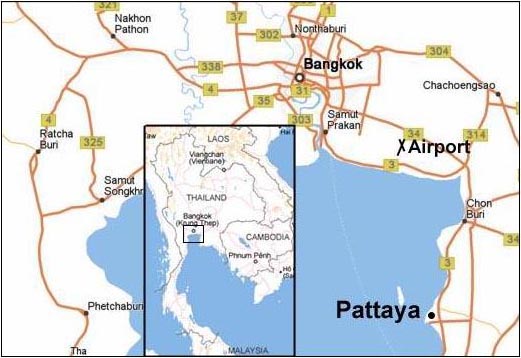
Pattaya is on the eastern side of the Gulf of Thailand, about 150 km from Bangkok and 125 km from Suvarnabhumi airport. The motorway is good these days, so budget about two hours from Bangkok and closer to ninety minutes from the airport, traffic depending. There is more on the actual airport transfer options in a later chapter.
How a Fishing Village Became This
Pattaya was a fishing village until American servicemen started arriving on R&R breaks from the Vietnam War, flying in through the nearby U-Tapao airbase. The bar scene grew up around them, and the town never really went back to what it was before. That origin is worth knowing because it explains a lot about the place: Pattaya was built from day one to give foreign men a good time, and sixty years on that is still the business it is in.
The Beach Reality Check
Get this straight before you arrive: Pattaya Beach is fine for a walk or a swim, but it is not why you come here. The sand is average and the water is not the clear blue you see on a Thailand brochure. If beach quality actually matters to your trip, catch the ferry from Bali Hai Pier to Koh Larn, about 30 – 40 minutes on the slow boat or a good deal faster by speedboat for more money, and you will find proper white sand. Koh Samet and the islands further south are also worth a longer trip if you want to build a couple of beach days around the rest of your holiday. For everything else, Pattaya’s beach is a backdrop, not the main event.
The Main Zones
Four areas matter to a first-time visitor. Where you base yourself shapes the whole trip, so it is worth understanding the character of each before you book anything.
Central Pattaya and Soi Buakhao
This is where most first-time visitors end up staying, and for good reason. Central Pattaya and the Soi Buakhao strip running through it are the working hub of the town: budget and mid-range hotels, an endless run of beer bars, LK Metro’s go-go cluster just off the soi, and enough restaurants and 7-Elevens to never have to think about logistics. It is busy, it is a little rough around the edges and it is the most convenient base for someone who wants everything within walking distance.
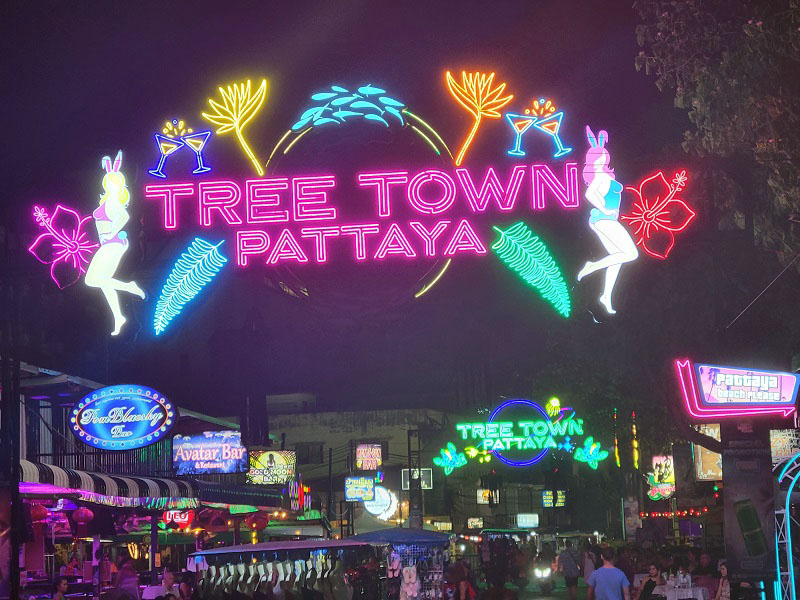
South Pattaya and Walking Street
South of South Pattaya Road is where the energy peaks. Walking Street is the strip most people picture when they think of Pattaya: wall-to-wall go-go bars, clubs and neon, pumping hardest from about 9 pm to 2 am. Staying right on top of it means you never need transport home, but you also never get away from the noise. A room a few streets back gets you the same access with a better night’s sleep.
North Pattaya and Naklua
North of the roundabout at Beach Road and Second Road, this is the quieter end of town. Expect upscale resorts, a strong European presence (German visitors especially) and a more relaxed pace generally. There is still a bar scene here, but it runs at a lower volume than further south. Good for a base if you want some distance from the noise without leaving Pattaya altogether.
Jomtien
South of Pattaya, over the headland from South Pattaya, Jomtien is a different pace altogether. The beach here is longer and better than Pattaya’s; there is a proper promenade, and the bar scene is far more subdued. It has become the favourite for long-stay expats and anyone on a repeat visit who has already done the main strip and wants somewhere calmer to sleep. Not the pick for a first trip if the nightlife is the priority, but worth knowing about.
Money, ATMs and Holiday Budgets
Setting a Daily Budget
Budgets in Pattaya vary enormously, and it really is up to you. A frugal day, sticking to cheap local food and beer bar prices without pushing the boat out, can cost 2,000 – 3,000 Baht once you pay for accommodation separately. A realistic nightlife holiday, with a few drinks bought for company and a proper night out, is more like 5,000 – 8,000 Baht a day. A carefree night out can take you up to 10,000 Baht a day. Go bigger than that, and you are into “ringing the bell” territory, which the How Bars Work chapter covers in detail. As this is your first trip, keep some spare funds aside rather than cutting it fine. You don’t want to spend your last two days in the hotel room because your budget ran out early.
Cash, Cards and ATM Fees
Cash is still king on the street in Pattaya. Bars, baht buses, market stalls and most small transport arrangements run on cash, so keep enough on you day to day.
Thai bank ATMs now charge a foreign card fee of around 250 – 350 Baht per withdrawal, on top of whatever your own bank charges. There is no way around this fee, so withdraw larger amounts less often rather than making several small withdrawals.
Tip: If your daily limit allows, look for Krungsri (yellow) ATMs, which typically allow withdrawals of up to 30,000 Baht in a single transaction, compared with the 20,000 Baht cap at most other banks.
There is one mistake that costs you more than the withdrawal fee. When a Thai ATM asks whether you want to proceed “with conversion” or have it charge you in your home currency, always decline. Choose “without conversion” or “charge in THB”. Accepting the home currency option hands the Thai bank the exchange rate, and they set it worse than your own card issuer would, a practice called dynamic currency conversion. It is a hidden markup on top of the withdrawal fee, and it catches out a lot of visitors who assume “in my own currency” sounds like the safer option.
Bringing and Exchanging Cash
It is worth bringing some cash from home to convert once you land, rather than relying on ATMs for everything. Bring clean, undamaged, high-denomination notes in your own currency. Older, marked or torn notes get a worse rate or get refused outright at exchange counters. Skip the airport kiosks and the hotel front desk if you can, both give you a worse rate than the independent exchange booths around town. If you need cash to get to Pattaya, only exchange what you need to get away from the airport. TT Currency Exchange is one of the better-known chains and consistently beats the bank rate. Compare the board rate against a currency conversion app before you commit if you want to be sure you are getting a fair deal.
Getting Around Town
Baht Buses (Songthaews)
The baht bus is the backbone of getting around Pattaya. These are the open-sided trucks with bench seats running a loop down Beach Road and back up Second Road, and the fare within central Pattaya is a flat 15 Baht per person.

Flag one down by sticking your arm out as it passes, and it will pull over if there is room. Once you are on, press the buzzer to signal you want off at the next reasonable stop, then pay the driver through the window as you get out, not before you climb aboard. This last point matters: if you ask “how much” before getting on, some drivers will treat it as a request for a private charter and quote you a price with a lot more zeros in it. Get on, ride, buzz, pay at the window. That is the whole system.
Ride-Hailing Apps
Bolt and Grab both work well in Pattaya and are the easiest option for anywhere off the main baht bus loop, Jomtien, the Darkside or a late airport run included. Prices are fixed and shown up front in the app, which takes the guesswork out of it entirely.
Motorbike Taxis
You will see motorbike taxi ranks on most corners, and they are quick and cheap for a solo trip somewhere the baht bus loop does not reach. Be realistic about the risk though. Helmets are often optional in practice and Thai road habits take some getting used to, so this is convenience traded against a genuine chance of coming off worse than you started. You may want to check your travel insurance fine print to ensure that you are covered.
Street Essentials and Etiquette
Staying Connected
Two networks matter here: AIS and True, which merged with DTAC back in 2023. True and DTAC still run separate shopfronts and separate pricing, but they share the same network these days, so it makes little real difference which counter you use.
At Suvarnabhumi arrivals you will find booths for both before you even reach the exit doors, most open 24 hours, so grabbing a SIM the moment you land is no hassle. What they sell you there is a tourist SIM: a fixed data bundle, often close to unlimited, valid for 8 – 30 days depending on the package, priced from about 300 – 1,200 Baht. Convenient, but you are paying a premium for that convenience, and once it runs out that is the end of it, no topping up.
A regular prepaid SIM works differently and costs less over time. Buy one at a 7-Eleven, a phone shop or a mall counter in Pattaya itself rather than at the airport, and you can top up as you go, month to month, for as long as you are here. If this is a one-off, week-long trip, the airport tourist SIM is the easier option. If you are the type who comes back more than once, or you are staying longer than a fortnight, skip the airport and set up a regular SIM once you are in town. It works out cheaper and keeps going past the tourist SIM’s cutoff.
One tip if you fall into that second group: I extend my own SIM this way rather than let it lapse during times away. True and DTAC make it cheap to keep the same number alive, dial *934*(number of days)# (where the number of days is 30, 90 or 180) and it adds that many days to your validity through the Jaidee service. The cost is 3 Baht per 30 days and can be for up to a year. No shop visit needed. Before leaving the country ensure that you have enabled roaming and have some credit left. AIS offers a similar extension, but True and DTAC remain the easier of the two to sort.
Either way, take your passport. Registration is a legal requirement, whichever SIM you buy and wherever you buy it, no exceptions.
If you would rather sort connectivity before you land, an eSIM (Airalo is a common choice) lets you land with data already working, provided your phone supports it, and skips the passport paperwork altogether.
Electricity
This one comes up more than you would think, so it earns its own spot.
Thailand uses 220 Volts at 50 Hertz. Sockets here are the hybrid type common across South East Asia, taking the flat two-pin American style plug (Type A), the flat two-pin with earth (Type B) and the round two-pin European style (Type C). Most hotel rooms and modern buildings have sockets that accept whichever of these you turn up with, so plug shape is rarely the actual problem.

Voltage is where people get caught out, Americans especially. Your plug will go straight into a Thai socket with no adapter needed, because the pin shape lines up. That is exactly the trap. Back home you are running on 110 – 120 Volts. Here it is 220. If whatever you have plugged in is not built to handle that, you will know about it fast, usually with a pop and a burning smell.
Most portable electronics these days are dual voltage and says so on the block in small print, something like “INPUT: 100 – 240V”. See a range like that, and you are fine anywhere. Hair dryers, straighteners, shavers and anything else with a heating element or a motor are the ones to check, since plenty are built for a single home market and don’t always make it obvious. Check the label before you pack it, not after you plug it in and watch it die. If it is not dual voltage, either leave it at home or pick up a cheap local one once you land; a basic hair dryer in Pattaya costs about 200 – 400 Baht, a lot less than replacing what you brought.
Worth knowing too: a plug adapter alone does nothing about voltage. It only changes the shape of the pins, not what comes out of the socket. Proper voltage converters exist if you genuinely need one, but for a short holiday it is easier and cheaper to just check what you are packing before you leave home.
The Three Seasons
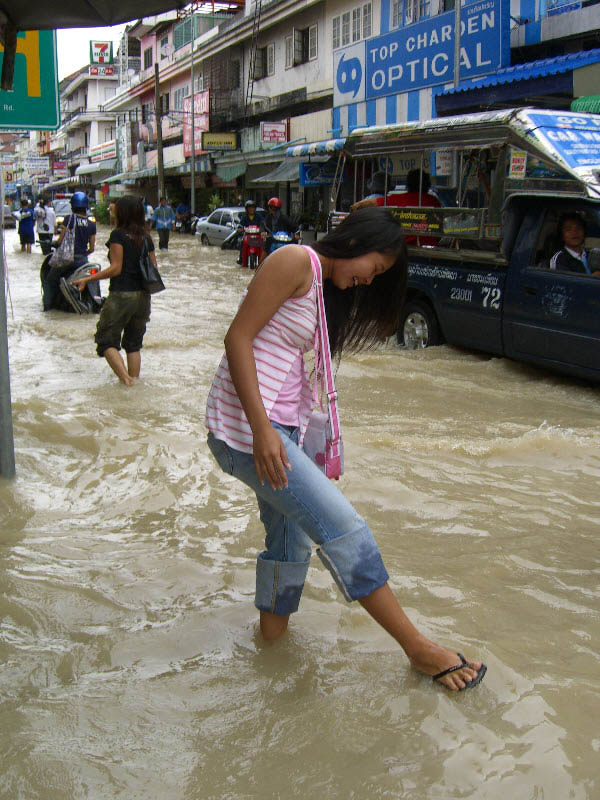
Pattaya runs on three seasons rather than four. Cool and dry from November to February is the most comfortable stretch and also the peak tourist season, so expect it busier and marginally pricier. Hot from March to May is the toughest for anyone not used to serious heat and humidity. Wet season runs June to September, which in practice means short, heavy afternoon downpours rather than constant rain, so it rarely ruins a whole day. Flooding is common during the wet season.
| Month | Avg High (°C / °F) |
Avg Low (°C / °F) |
Rainfall (mm / in) |
Rain Days | Season |
|---|---|---|---|---|---|
| Jan | 31°C / 87°F | 23°C / 73°F | 16 mm / 0.6″ | 2 | Cool & Dry (Peak) |
| Feb | 31°C / 88°F | 24°C / 75°F | 15 mm / 0.6″ | 2 | Cool & Dry (Peak) |
| Mar | 32°C / 90°F | 26°C / 79°F | 53 mm / 2.1″ | 4 | Hot Season Begins |
| Apr | 33°C / 91°F | 27°C / 81°F | 65 mm / 2.6″ | 6 | Peak Heat (Songkran) |
| May | 32°C / 90°F | 27°C / 81°F | 150 mm / 5.9″ | 12 | Early Monsoon |
| Jun | 32°C / 89°F | 26°C / 79°F | 120 mm / 4.7″ | 11 | Shoulder / Mixed |
| Jul | 31°C / 88°F | 26°C / 79°F | 100 mm / 3.9″ | 11 | Shoulder / Mixed |
| Aug | 31°C / 88°F | 26°C / 79°F | 100 mm / 3.9″ | 12 | Shoulder / Mixed |
| Sep | 31°C / 88°F | 25°C / 77°F | 220 mm / 8.7″ | 17 | Peak Wet & Floods |
| Oct | 31°C / 88°F | 25°C / 77°F | 215 mm / 8.5″ | 17 | Heavy Rains |
| Nov | 31°C / 87°F | 24°C / 75°F | 70 mm / 2.8″ | 7 | Transition / Drier |
| Dec | 30°C / 86°F | 22°C / 72°F | 10 mm / 0.4″ | 1 | Cool & Dry (Peak) |
When to Plan Your Trip for Weather Conditions:
- The Best Window (December to February):
- The sweet spot for first-timers. Daytime highs sit around 30°C to 32°C with lower humidity, clear skies, and almost no rain. Evenings can actually feel pleasant with a cool sea breeze.
- The trade-off: Peak season crowds, busy bars, and higher room rates.
- The Furnace (Around April / March to May):
- The most brutal time of year. Temperatures regularly push 35°C to 38°C with oppressive humidity that makes walking outside after midday exhausting.
- You will spend your days hopping between air-conditioned malls and cooled bars. Mid-April also brings Songkran, where the entire city becomes an inescapable, week-long water fight—great if you want a non-stop party, a nightmare if you just want a quiet walk to lunch.
- The Deluge (Around September / September to October):
- The wettest stretch of the calendar and the peak risk for flash flooding.
- While storms are often short, monsoon downpours dump immense volumes of water in under an hour. Pattaya’s drainage system routinely backs up, turning sections of Beach Road, Third Road, and low-lying parts of Soi Buakhao into knee-deep brown rivers that bring motorbike and car traffic to a standstill.
- The Smart Shoulder (June to August):
- Solid middle ground. You get overcast skies that blunt the brutal heat, lower hotel rates, and thinner crowds. Rain usually arrives as a quick 40-minute afternoon deluge rather than an all-day washout.
Buddhist Holidays and Alcohol
Alcohol sales are banned outright on certain Buddhist holidays and on election days, when the bars close for the day. I keep a running page on the alcohol ban dates for the year, worth a quick check before you lock in your travel dates: Pattaya Holidays.
Manners That Matter
Keep your shirt on once you are off the sand. Walking around a 7-Eleven or a shopping mall bare-chested is more common than it should be, and it reads as disrespectful rather than relaxed. Save it for the beach.
The other habit worth learning early is patience. Thai culture treats losing your temper in public as a loss of face, both yours and everyone else’s, and raising your voice at someone will get you a worse outcome than staying calm ever will. If something goes wrong, and eventually something will, a level tone and a bit of patience clears it up faster than getting angry does. Smile, stay calm, sort it out. Thailand challenges most people’s patience.
From here, head into the Bar Areas chapter for the ground-level detail on where to drink and what things cost, or the Ladies chapter if you want to understand who you will actually meet and how the whole dynamic works.