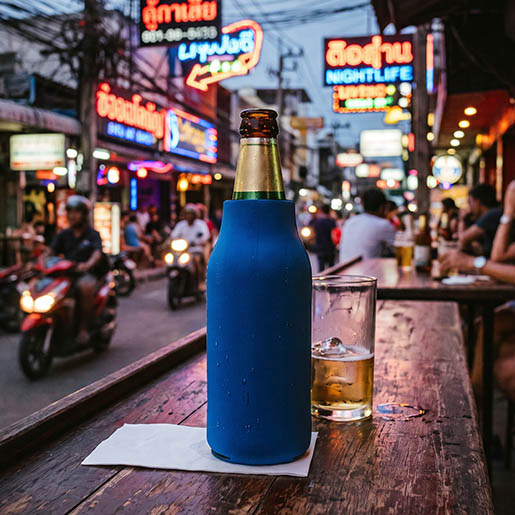
Pattaya Scams: What’s Actually Still Going On (2026 Update)

A lot of outdated scam advice about Pattaya is still floating around. Half of it is exaggerated fearmongering, and older traps that once cluttered travel guides have largely faded away. What’s replaced them is quieter, subtler, and usually hits your wallet harder: motorbike and jet ski rental shakedowns, songthaew drivers who turn a 15-baht hop into a private charter and ATM conversion prompts designed to siphon your bank balance.
None of this is designed to scare you off. Pattaya is still an easy, enjoyable place to spend time. But a first-timer who knows what to watch for saves themselves money and hassle. Here’s what’s actually worth knowing.
Nightlife Money Games
The bar scene has its own set of well-worn tricks. None of them are complicated once you know they exist.
Bill Padding: How the Check Bin Actually Works
Bars in Pattaya run on a check bin system. While you are in a bar, you get a small container into which bill slips are placed with each drink. It’s an easy system for a busy bar to lose track of, and an even easier one for a slow night to “help along.”
- Check the bin yourself every time a new round arrives; don’t wait until you’re ready to leave.
- If you’re settling up at the end of a long session, you’re trusting a running tally you never verified. Consider paying as you go instead. I don’t think I have ever seen anyone doing this though.
- Extra items appearing on the slip are usually resolved calmly and immediately by pointing at the bin and asking the mamasan to walk you through it. Most staff will fix it without drama; it’s usually not personal.
The 500 Baht Switch
You hand over a 1,000 baht note. By the time the change comes back, you’re told you only gave 500. This one relies entirely on you not paying attention at the exact moment of handover. It usually happens in gogo bars.
- Hold the note up and say the amount out loud before it leaves your hand — “one thousand”, so there’s no ambiguity to exploit.
- Carry small notes when you’re out drinking. A pocket full of 100s means you’re rarely handing over anything large enough to be worth the swap.
- Count your change on the spot, every time, without exception. It takes five seconds and it’s the whole defence.
Long Time Becoming Short Time
You agree on a “long time” (overnight) rate, and a few hours in, she’s got a headache, a sick relative, or an early start. Suddenly, it’s over; however, you’ve already paid the long-time price.
- Before any money changes hands, agree explicitly on when she’s leaving in the morning. Get a time, not a vague “later.” Never pay before her departure.
- If she leaves well before that agreed time, you only owe the short-time rate for however long she actually stayed, not the full amount. Say this upfront, not as a surprise at 3am.
- This isn’t about being tight; it’s about both sides knowing the deal before it starts, which avoids the argument later.
High Season Bar Fine Hikes
During peak months, bar fines quietly climb. It’s less a scam than simple supply and demand. Bars raise fines to stop their girls from walking out the door with the highest bidder. It still catches newcomers off guard when the number is different from what a mate told them last year.
- Ask the fine upfront, every time, at every bar. Don’t assume it’s the same as your last trip, or the same as the bar next door.
- If the number feels high, it probably reflects the season, not a bar trying it on with you specifically.
Scams Away From the Bars
Not everything to watch for happens after dark.
Foreign Scammers and Sob Stories
Every so often, a well-dressed, plausible fellow foreigner will approach you with a story about a lost wallet, a stolen bag, or a flight he can’t afford to miss. He just needs a bit of cash to tide him over.
- It’s a con almost every time. A polite “no thanks” and moving on is all it deserves.
- You don’t owe anyone an explanation, and you’re never obligated to solve a stranger’s emergency on the street.
Bus Station Ticket Short-Changing
At the bus station ticket counters, there have been persistent reports of change coming up short (usually by around 100 baht) on the assumption you won’t notice or won’t bother arguing over it.
- Count your change at the counter before you walk away. If it’s short, say so immediately. They usually correct it on the spot once you ask.
- The simpler fix: book your onward travel through an official online portal before you get to the station. It costs the same, and it removes the cash handover and the opportunity.
Hotel New Year’s Eve “Compulsory” Gala Fees
If you’re in town over New Year’s Eve, some high-end hotels quietly add a mandatory gala dinner or “gala ball” charge to your stay. Sometimes they disclose it at booking; sometimes they mention it only when you check in.
- Ask directly, before you book anything over the NYE period, whether a compulsory event fee applies and how much it is.
- If a hotel won’t give you a straight answer upfront, that’s your answer; book somewhere else
The Newer Stuff
These are the scams that have actually grown since the old warnings were written, and they’ll cost you a lot more than a padded bar tab if you’re not careful.
The Jet Ski and Motorbike Damage Shakedown
This is the one that does the real financial damage. You rent a jet ski or a motorbike and hand it back in the same condition you got it. Suddenly, the owner is pointing at a scratch or a dent that “wasn’t there before”, demanding anywhere from 20,000 to 50,000 baht on the spot.
- Film a full 360-degree video of the vehicle before you take it to capture every panel, every existing scratch, the tyres, and the mirrors. Do this in front of the owner if possible.
- Never hand over your passport as collateral. A phone number, a cash deposit or a photocopy is reasonable. Your actual passport is not, and it’s the single biggest thing that turns a dispute into a genuine hostage situation for your documents.
- If a shakedown happens anyway, stay calm, don’t hand over cash under pressure and get the Tourist Police involved (see below) rather than negotiating alone in a car park.
Songthaew (Baht Bus) Private Charter Trap
The blue songthaew trucks run a loop around town for a flat 15 baht per person. The trap is entirely self-inflicted: asking the driver “do you go to X?” or naming a specific destination is often taken as a request for a private charter.
- On the standard loop, just flag one down heading in your general direction and hop on. Don’t ask about a specific destination, as the baht bus doesn’t work as a point-to-point taxi by default.
- Watch where it turns off the main loop and hit the buzzer when you’re near where you want to be. Pay the flat fare (15 baht as of writing, though check current pricing) as you get off.
- If you do want a private trip somewhere off the loop, agree on the price with the driver before you get in. This is a legitimate charter, not a scam, as long as the price is clear upfront.
The ATM Currency Conversion Trap (DCC)
Nearly every ATM in Pattaya now throws up a screen asking if you want to “continue with conversion” or “continue without conversion,” often phrased to make the conversion option look like the sensible default.
- Always choose “Without Conversion” (sometimes worded as “Continue in THB” or similar). This tells the ATM’s bank to let your own bank handle the exchange rate, which is almost always better.
- Choosing “With Conversion” (Dynamic Currency Conversion, or DCC) locks in a rate set by the ATM operator (typically several percent worse than your bank’s rate), and once you’ve chosen it, that markup is baked in and can’t be undone.
- If the screen is confusing, or if you’re in a rush, take the extra few seconds to read it properly.
Ride-Hailing vs. Street Taxis
Late at night, especially around Walking Street, street taxi drivers will often quote a flat fare well above the meter rate or simply refuse to run the meter at all outside the busiest tourist strips and malls.
- Use Bolt or Grab. The price is fixed and shown before you accept, there’s no negotiation and there’s a digital record of the trip.
- If you do flag a street taxi, agree on the price before getting in, or insist on the meter. Walking away and calling a ride-hail app instead is usually the faster option anyway.
- Selecting a centrally located hotel bypasses this risk. Use the baht bus instead.
If a Situation Escalates
Occasionally, a money dispute gets heated. How you handle the next few minutes matters more than who was technically right.
- Stay calm. Raising your voice or getting physical in Thailand escalates things fast and rarely ends well for the foreigner involved, whatever the rights and wrongs of the situation.
- Losing face matters a great deal here, on both sides. Giving the other person a way to back down without embarrassment often resolves things faster than being proven correct.
- If you can’t resolve it on the spot, call the Tourist Police on 1155. They deal with exactly this kind of dispute constantly, speak English, and are the right people to involve rather than trying to win an argument alone in the street at midnight.
None of this is meant to make Pattaya sound like a minefield. It isn’t. Know these few tricks, keep your wits about you after a few drinks, and you’ll have exactly the trip you came for.

Last Updated on 21 October 2026 by Rob